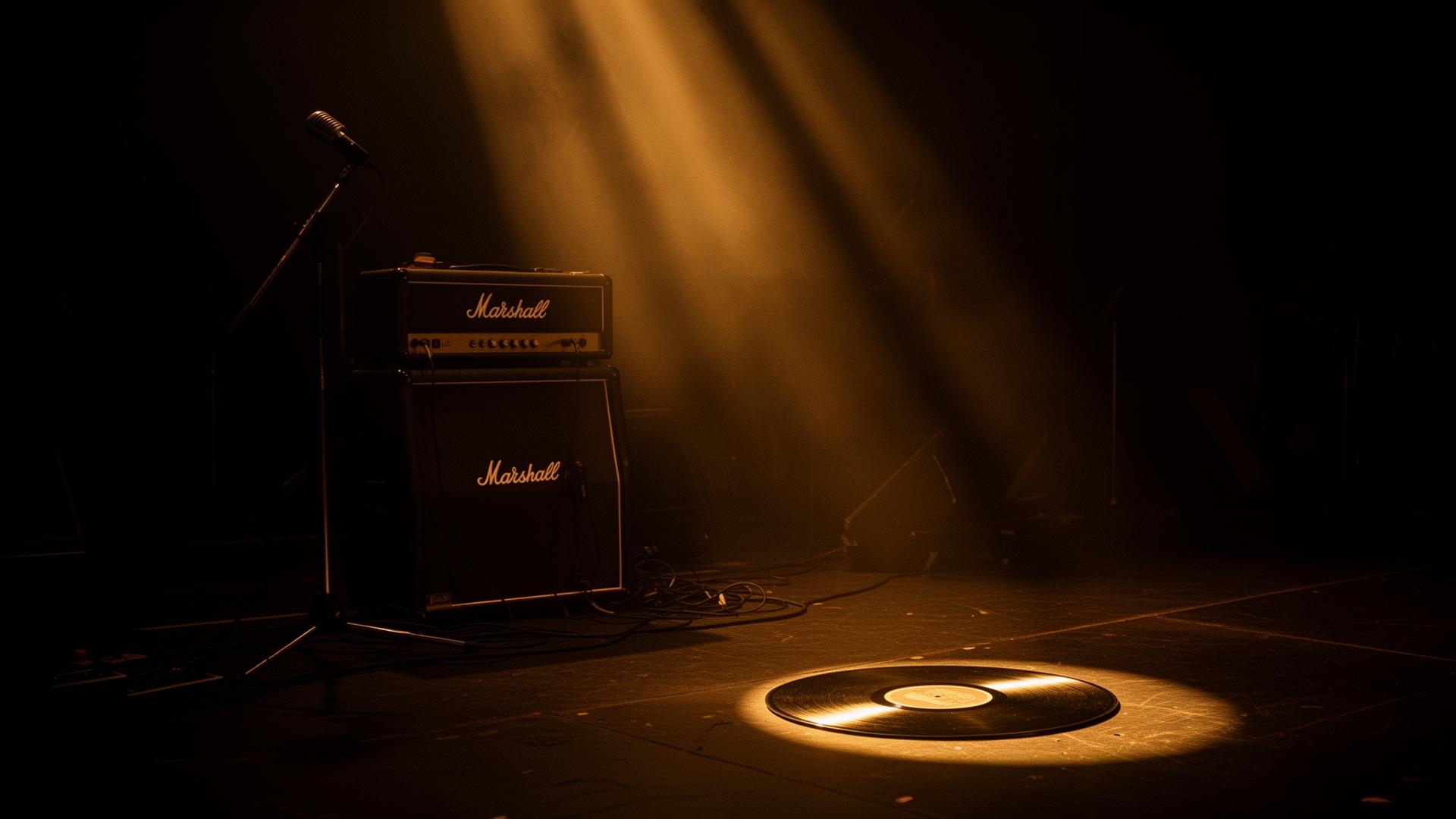
They were the architects of electricity. They bent light into sound, turned amphitheaters into cathedrals, and filled the air with the particular voltage that only live rock and roll at its peak could generate. Between 1970 and 1989, these men and women shaped a culture. They also, quietly and catastrophically, came apart inside it.
The drugs were never incidental — they were the wallpaper, the fuel, the mythology. Cocaine was currency. Heroin was romantic. Alcohol was the ambient hum of the tour bus before breakfast. Whole record labels ran on excess; whole decades were consecrated to the proposition that the louder and more chemically altered you were, the more authentically you were living. And for a while, many of them believed it.
Then the music stopped. Not for all of them — some never returned from the dark. But for a cohort of rock's most storied survivors, sobriety arrived like an unexpected modulation in the final bar of a song they thought they knew. And what happened next is the story the rock history books rarely tell: the long, unglamorous, profoundly human descent from the head into the heart — and the communities that grew up in the warmth of that descent.
The noise had to stop before I could hear anything real. Decades of volume — and not one note of it was what I was actually looking for.
Steven Tyler — Aerosmith
The Architecture of Addiction
To understand what recovery has meant for these artists, it helps to understand what addiction meant. For most, it was not simply pleasure — it was protection. The stage demanded a performer's total emotional nakedness, and then the world demanded the performer sustain that nakedness in hotel rooms, in press junkets, in the impossible ordinary hours between shows. Substances answered that demand. They numbed the gap between the persona and the person. They made the head — restless, analytical, haunted by image — feel, briefly, like enough.
The head, of course, is never enough. This is the insight that threads through every genuine recovery story these artists carry: that addiction is not a moral failing or a character defect, but a misdirected search for connection. The search went into the bottle, into the needle, into the gram — because the channel between the thinking mind and the feeling heart had been blocked, clogged with the sediment of performance, fear, and the relentless pressure to be larger than life.
Recovery, as these artists have learned and now teach across continents, is fundamentally a clearing. It is the slow, patient, often painful work of reopening that channel — letting intelligence and emotion speak to each other again after years of enforced estrangement.
Portraits of the Passage
Their names are synonymous with the era. Their stories, in recovery, have become something more: maps for others navigating the same terrain.
Recovery gave me back the ability to cry. I hadn't cried in fifteen years. The first time I wept sober I knew something had come back online that had been dark for a very long time.
Joe Walsh
The Global Current
What links these stories across geography, genre, and generation is a shared metaphysics — one that maps neatly onto what Clear Channel has been exploring across this series. The head is not the enemy. It is simply not the home. The thinking mind, brilliant and necessary, cannot complete the circuit on its own. Recovery, as these artists have discovered and now transmit, is the practice of reconnection — not transcendence, not escape, but descent. Down from the fortified towers of cognition and performance and image management, into the warmer, more vulnerable, more dimensionally alive territory of the heart.
That descent is now happening in recovery rooms across six continents. The musicians who once filled stadiums are showing up in basements and church halls and community centers — sometimes famous, often anonymous, always carrying the same essential freight: I know what it is to be cut off from myself. I know what it is to come back. Let me tell you how the return begins.
Crossroads Centre has treated patients from over forty countries. Joe Walsh's Livin' in the Light has supported hundreds of musicians in navigating treatment access and ongoing recovery. Steven Tyler's Janie's Fund has provided tens of millions of dollars for girls who have experienced trauma — a recognition that the channel is blocked not only by substance but by wound, and that clearing it requires tending to the source, not merely the symptom.
Alice Cooper speaks in recovery contexts internationally, weaving the language of faith into the vocabulary of program without apology. Eric Clapton has been known to attend twelve-step meetings while on world tours, not as a celebrity making an appearance but as a member — someone who understands that the channel can close again at any moment and that community is the practice, not the pause before the practice resumes.
What the Music Always Knew
There is a beautiful and painful irony in all of this. The music that these artists made in their most chemically saturated years was often their most emotionally alive — or appeared so. The blues wept through Clapton's fingers; Tyler screamed something that sounded like the rawest human longing; Walsh bent notes that seemed to have been excavated from somewhere beneath rational thought. The music was always trying to go where the head could not reach. The tragedy is that the substances seemed to help — and the deeper truth, the one recovery reveals, is that they were never required. The channel was always there. The heart was always there. The noise was in the way.
Sober, these artists often report the same revelation: that the music is better now, or at least truer. That the performance, stripped of its chemical scaffolding, is more genuinely connected to the audience — because the performer is genuinely connected to themselves. The transaction that happens in a great concert, the sense of shared aliveness that passes between the stage and the crowd, turns out to depend not on the performer's elevated state but on their presence. And presence, as any contemplative tradition will confirm, is what we mean when we say the channel is clear.
This is the gift the survivors of the 70s and 80s are carrying into the twenty-first century. Not nostalgia. Not the cautionary tale. But living proof that the descent from head to heart is survivable — and that on the other side of the descent, something worth transmitting waits. A kind of music that does not require volume to be heard. A kind of signal, clean and true, crossing no wires and encountering no static. Clear Channel. All the way through.